Upgrade Your Drupal Skills
We trained 1,000+ Drupal Developers over the last decade.
See Advanced Courses NAH, I know Enough
In order to create great digital experiences, you need to first have a great team in place. If you're reading this, you've probably already come to the conclusion that you need a Drupal team, whether it's to build a brand new Drupal site or to maintain an existing site. We've broken down some of the challenges and solutions for you to consider when building your Drupal team.
Defining the Skills and Roles Your Team Needs
First, it's important to step back and understand all of the different skills and roles that you may need on your team, depending on what stage you're at in your Drupal process. A team that is building a Drupal site may look very different from a team that is maintaining a Drupal site.
To build a Drupal site, your team likely needs to include:
- Product Owner to gather the requirements for the site and determine what the site needs to do
- Experience Design to design the site
- DevOps to build the infrastructure to host the site
- Technical Architect to plan out the site build
- Developers to build the site
- Project Management to keep the project on track
- Quality Assurance to confirm the site works as intended
- Content Editor/Creator to build out the content for the site
Once the site is built, however, your team needed to run and maintain the site may need to include:
- Developers to maintain and enhance the site
- DevOps to keep the site up and running
- Content Editor/Maintainer to keep the content up-to-date
- Marketing to attract users to your site
- Analytics/Insights/SEO to understand how users are using your site and adjust the site accordingly
- Project Management to manage the team on a day-to-day basis
- Product Owner/Experience Design to plan out and design new features and functionality for the site
Not only can the needed roles change depending on whether you're building a site or maintaining it, but some of the skills required won't be needed at the same frequency. For example, for any reasonably sized site, you will need at least one full-time developer to maintain the code, fix bugs, and add enhancements. However, once the platform is built, the amount of DevOps tasks may not occupy someone full time.
So this then leads us to the question of: should you build your entire Drupal team in-house? Or should you outsource some of it—or even all of it?
Building Your Team: Hire In-House, Outsource, or Both?
The possible solutions fall on a spectrum and each has its own set of considerations.
Hire the Entire Team In-House
If your organization is large enough, there's a good chance you have the resources to hire an entire team.
First, map out the talent you already have available to you internally, and identify the gaps in skills that need to be filled. Then, before jumping immediately into recruiting for the specific roles outlined above, consider if you might be able to hire someone that is more of a generalist. For the skills that won't be needed often enough to keep someone busy full-time, can you find one person to wear several different hats? If so, can that person be effective enough at those different skills for your Drupal site to be successful?
After exploring your options, it's time to move into the recruiting and hiring process. Good Drupal talent can be hard to find, but it's out there! A good place to start is on LinkedIn, searching for people with Drupal capabilities that may be in or connected to your network. Networking in the community can be very helpful if you're looking for local talent: consider meetups, or local events like MidCamp in Chicago if the timing is right. There are also job sites that specifically call out Drupal talent, like jobs.drupal.org.
Hire An Agency That Already Has People With the Skills
If your organization is smaller and you don't have the resources to hire an entire team for building and maintaining your site, your best bet may be to work with an agency.
If you do not have an IT team, it might make more sense to host your site with a provider like Acquia rather than building a DevOps team to monitor and maintain the infrastructure. Even if you do have a knowledgeable IT staff, it may not make sense to use them for this if they are not used to working with the technologies needed to host a Drupal site.
By working with the right partner, you can rest assured that your site is in the hand of experts. When evaluating partners to work with, you’ll want to first make a list of the things that matter most to you. You probably want more than just a great website end result; more than likely, you also want to become smarter from the experience and retain knowledge, as well as have confidence that you’ll be able to maintain and grow the site.
Identifying what you want to get out of the experience besides the actual website will help guide you in choosing the type of company you want to work with. Some companies will focus solely on turning the website around quickly. Others, like Bounteous, focus on improving digital capabilities and maturity—while also delivering an excellent experience to your customers. If that entices you, look for partners that value co-innovation.
We also encourage you to choose a partner that contributes to Drupal. This will have a great impact on the Drupal community and, ultimately, improve the Drupal ecosystem.
Hire an Agency to Build the Site, Then Hire and/or Train Your Own People to Run & Maintain It
The perfect solution for your needs might be a mix of the first two options. Hiring an agency to do the build and then hiring and training your own people to maintain it will grant you the benefits of having experts build your site, and not having to hire an internal team for building that might then need to change once the build is done.
This option is also beneficial because once your partner of choice is finished with the site build, they can actually be a great resource in helping to hire the talent you need to maintain the site.
Your strategy can (and likely will) shift over time, so your approach to your Drupal project should reflect that. Even if your long-term desire is to do it all in-house, you can ease into that through evolving your approach over time. Some of our clients bring us in at the start to build the platform and create a strong foundation. Then they have us actually teach them Drupal and work alongside them as they learn. Ultimately, they end up taking over everything in-house.
Take the Long Road and Learn as You Go
Building a Drupal team can seem like a daunting and challenging process, but the good news is that you're never alone. Take time to consider the phases that occur after launching a site, a new site will need to do more than just expose information—what integrations are required, what will come next in terms of digital capabilities? Thinking about maintenance and growing your digital maturity may influence your hiring/staffing goals.
Rethinking the Replatform - Taking Advantage of Drupal’s Features and Flexibility
Get (or stay) involved with the Drupal and open source community. Involvement in the community means you will always be surrounded by individuals who are more than happy to answer any questions and provide guidance along the way. Learn from other people's experiences and stories and apply those learnings to your own decisions. And lastly, adapt and learn as you go!
Your great Drupal team is within reach—get out there and make it happen!
PHPStorm is one of our favorite Integrated Development Environments (IDE) for building Drupal sites. In addition to its outstanding ability to help any PHP developer's productivity, it offers several Drupal-specific time-saving tools—like the ability to handle code completion for hook declarations and applying Drupal coding standards.
Among the many tabs that border the PHPStorm IDE window is one that offers access to one of the hardest-working components of the Drupal ecosystem...the database!
Many developers only interface with the database via Drush commands, performing database backups, or moving content from the server to their local machine. Given the Drupal database is where all content and active configuration are stored, developers should feel comfortable leveraging the database as a research and diagnostic tool when developing solutions or debugging problems. The database can provide insight into how your data is flowing throughout the system, which can help when debugging errors or when working with a new module that modifies data before saving.
In this guide, we'll show you how to connect to your local Lando environment’s Drupal database from within PHPStorm. If you’re using another local environment like DrupalVM or DDEV, you can use the following steps as a guide for how you can connect these other environments.
Obligatory warning: After you connect to the database, you'll have access to modify or delete data, tables, or the entire database. Be sure you’re not working directly with a live/production database! We suggest using the database tool on a local copy of the database that can be restored if needed.
Step 1 - Allow Lando to Receive Incoming Database Connections
By default, Lando does not allow anything but the Lando app to connect to the database server, so we need to tell Lando that it’s OK for PHPStorm to connect. In the Lando configuration file (either the project-wide .lando.yml, or in the local overrides .lando.local.yml), add the following lines:
services:
  database:
    portforward: 3307
When added to a basic .lando.yml recipe, the file will look like this:
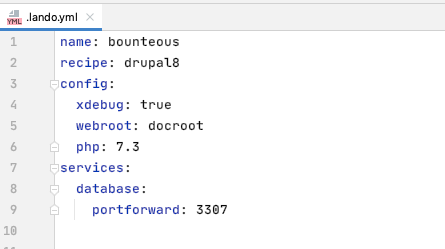
This allows port forwarding on port 3307 to the host 'database', which is the default name of the database container in the drupal8 / drupal9 recipe in Lando. If your database hostname is different, update as needed.
Finally, for this step, rebuild the Lando environment with lando rebuild --yes.
Step 2 - Connect the Database in PHPStorm
Now that Lando has been rebuilt and is running, we can connect PHPStorm to the Drupal database. If it’s not already open, click the database tab to open the database pane.
In the database pane, click the + sign to add a new data source, select MySQL (or MariaDB).
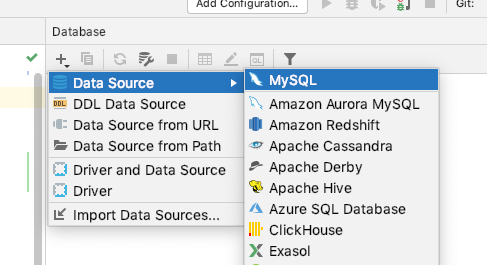
In the new window that opens, enter the server information and credentials to connect:
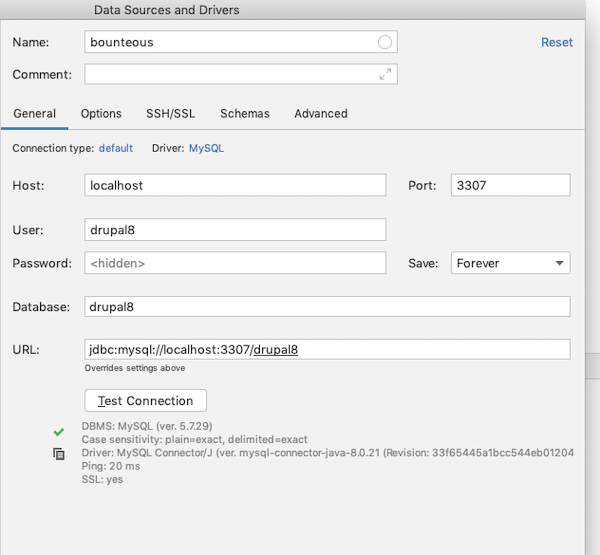
Since we’re using the default values that come with the Lando drupal8 recipe, we’ve entered:
- Name - a name you want to call this in configuration
- Host - defaults to localhost, you should be able to leave it as is
- Port - 3307 (or the port you assigned in
.lando.yml) - User - drupal8 (or the database username you assigned)
- Password - drupal8 (or the password you assigned)
- Database - drupal8 (or the database name you assigned)
When you click "Test Connection" you should see a green checkmark to verify that it connected successfully.
So, now what?
Step 3 - Use the Database!
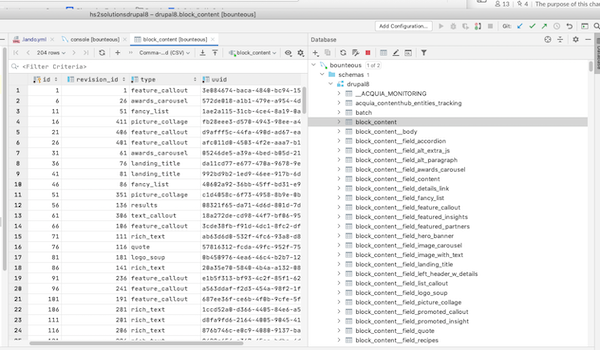
The database pane should show you a tree of the database tables in your Drupal database. When you connect to the database, a console tab will open up in the main editor window. You can also browse the data in a table by double-clicking on the table name in the database tab. In the image below, we’ve opened the table block_content and have the data as a table in the main editor window.
Why Use this Database Tool Over Others
The database tool within PHPStorm has most of the features of JetBrains’s DataGrip IDE. There are too many features to cover, but here are three of our favorites:
Feature 1 - Viewing the Data in a Table
This seems pretty mundane, but scanning through data tables can help you visually pick up patterns about your data. The column headers allow you to sort by one or more columns to help you review the data in the table. You can also drag to rearrange the columns to make viewing the data easier for your task.
Feature 2 - Finding Data in a Table
When you need to find a specific string in a table, you can write a query by hand or you could use some of the built-in tools to make finding the string much easier. When you’re viewing a table, you can search all rows and columns by simply pressing Cmd+F or Ctrl+F. A magical search form will appear:
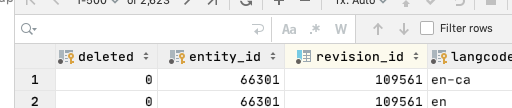
As you start typing, data cells with your search string will be highlighted. You can also check the "Filter rows" box to only show the rows that have your search string in them:
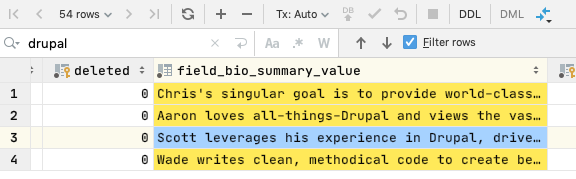
There are also options to search with case-sensitivity or with regular expressions, which can help you find all of the data that you’re looking for.
Feature 3 - Finding Data ANYWHERE!
This is a great tool to use when you know what you're looking for, but you aren’t sure where to find it. You no longer have to navigate a huge haystack of the SQL export text file to look for your needle!
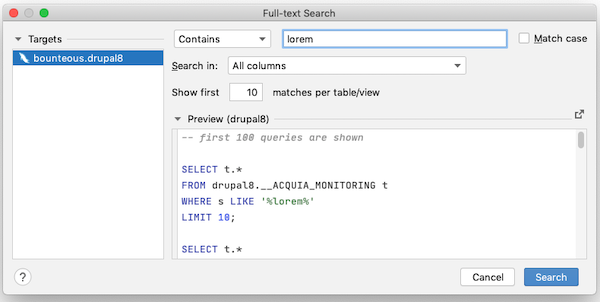
In the database tab, right-click on the drupal8 database and pick "Full-Text Search...":
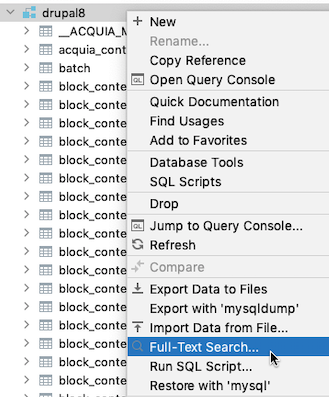
In the new window that opens, you can enter your search term and press Search:
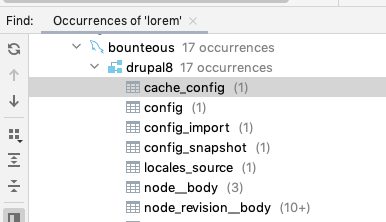
PHPStorm will open the "Find" tab and show you how many matches were found in the tables of your database:
Delivering Great Digital Platforms
PHPStorm is a true workhorse of Drupal development. It allows talented people to be more productive in their efforts to create amazing features for Drupal and awesome digital experiences for users. The built-in suite of tools for PHPStorm—especially the database tools—makes this IDE my favorite when it comes to delivering great digital platforms for our clients at Bounteous.

DrupalCon Barcelona 2024 is a wrap. This DrupalCon was special not only because it was a return to a beautiful city, but also because it was the first DrupalCon since the announcement of Drupal Starshot (now known as Drupal CMS). Drupal CMS is an important advancement of Drupal as the community continues to innovate and expand Drupal’s capabilities. In his 40th DriesNote, Dries Buytaert, creator and product leader of Drupal, demonstrated the progress that has been made to date with Drupal CMS.
At DrupalCon Portland earlier this year, Dries introduced Drupal CMS. The goal of the project is to build a version of Drupal that is optimized for non-developers, like content creators, digital marketers, and site builders. Drupal CMS will not replace Drupal as we know it. Instead, Drupal CMS will be built on top of Drupal Core. Developers will continue to use Drupal Core to build more complex Drupal builds, yet will benefit from the advances made to developer Drupal CMS.
As we covered in our previous article on Drupal CMS, the primary goals for the forthcoming Drupal CMS are to enable marketers and non-technical users to create ambitious digital experiences, improve the ‘out-of-the-box' functionality of Drupal, adapt to emerging trends in the technology/CMS space, and boost the overall adoption of Drupal.
The launch of Drupal CMS is set for January 15, 2025, which will be Drupal’s 24th birthday and just a few weeks after Drupal 7’s end-of-life. The retirement of Drupal 7 and the launch of Drupal CMS will mark a significant transition in Drupal’s evolution, as all supported versions of Drupal will now be built on a modern framework that will be easy to upgrade and extend over time.
*If you are currently on Drupal 7, time is quickly winding down to Drupal 7’s end of life in January 2025. Bounteous x Accolite can help you quickly move your site from Drupal 7 to the latest version of Drupal with our Migration Accelerator technology. Contact us for more information.
What Progress Has Been Made So Far?
When Drupal CMS was announced, Dries laid out the vision to complete the 1.0 version in eight months. It has been about four months since then, so Drupal CMS is about halfway through the timeline.
In his DriesNote, Dries demoed the current progress of Drupal CMS. The demo focused on several key areas: trial experience, artificial intelligence capabilities, SEO capabilities, and Drupal Recipes. All this was done through the lens of a non-developer building a new website.
Improving the Drupal trial experience is an important way to get more people to try and adopt Drupal. Historically, it has taken expertise to set up Drupal just to try it out. You would either need to set it up on a server or have a local configuration to set it up. Both require setting up and configuring software before even setting up Drupal. With Drupal CMS, it is now easy to set up a Drupal demo environment. If you follow this link, you can try Drupal in a browser. No server setup or configuration is necessary.
Leveraging AI to Enhance the Site-Building Experience
In the demo, a hypothetical user asked the AI Agent (which took form as a chatbot) to make modifications to a Drupal content type, including changing the name of the content type and adding an image field. This feature will give people unfamiliar with Drupal the ability to make changes within Drupal without needing to learn site building and administration.
The demo also showed a content migration of a simple blog post into Drupal. When provided with the URL of a page, the AI Agent retrieved the page, parsed the content, and mapped it into fields of an existing blog post content type. It also augmented the content by classifying it with taxonomy terms.
Together, these AI features show the potential of AI with creating, migrating, and managing content. Dries noted that AI will be a fundamental shift in how Drupal sites are built, empowering non-technical users with tools that allow them to fulfill the aim of creating ambitious digital experiences.
Introducing Experience Builder
The second notable item shown in the demo was the new Experience Builder. Experience Builder gives users the ability to place and update freeform content on pages a visual building experience. It features previews of content at both desktop and mobile breakpoints, giving insight into what the published page will look like. Experience Builder is the most effort-intensive feature within Drupal CMS with the equivalent of 30 full-time contributors to the initiative. Dries indicated that Experience Builder will not be production-ready at the initial launch of Drupal CMS in January but will be included in a future version of Drupal CMS in 2025.
Other features of Drupal CMS will be available through Drupal’s system of Recipes. Recipes are pre-packaged features that are designed to provide one-click installation of functionality to address frequent use cases for site administrators. To date, 14 features have been identified to be part of Drupal CMS. In addition to the AI features we mentioned above, there will be Recipes to bring enhanced SEO, accessibility, analytics, and marketing tools to sites, among others.
The future of Drupal is just a few months away. When it is released, Drupal CMS should significantly expand the usage of Drupal across the internet by making building Drupal easier for non-developers. Attaching this wider range of users and organizations to use Drupal to reach their audiences will spur growth within the Drupal community, provide greater community support, and make the overall Drupal ecosystem stronger.
Drupal CMS will also establish a framework for future-proofing Drupal. By investing and releasing new features like AI and Experience Builder will help Drupal remain competitive and relevant as methods to content management evolve. We are particularly excited to see this approach of releasing bold and innovative features through Drupal CMS rather than through the traditional experimental module approach. This new approach allows Drupal to be more nimble as future features and needs are identified and rolled out.
We are excited to see how Drupal CMS continues to develop and evolve in the coming months and years!
Interested in Learning More?
Take a look at the demo from the Driesnote, and tune into DrupalCon Singapore in December, when it’s anticipated the demo will be ready for release.

Drupal is at a crossroads. Currently, enterprise-level Drupal implementations provide amazing capabilities for digital experience platforms. However, these platforms often require specialized talent to build out so that enterprise organizations can realize the power Drupal brings to bear. Should Drupal stay on the same path, or should it adapt and become more friendly to marketers and less technical people looking to create new websites? If Drupal stays on its developer-driven, developer-focused trajectory, it could become a niche content management system (CMS) with a smaller footprint in the enterprise CMS platform space.
Having worked with Drupal for more than 15 years, I know that Drupal is easy to implement and use. But when looking back at that time, it was not easy to get started and learn. And now, 15+ years later, Drupal is much more feature-packed and complex. Getting started with Drupal today can be overwhelming for users without a technical background or who haven't used the underlying technologies in other projects or contexts.
During the DrupalCon North America 2024 main keynote (affectionately called the “Driesnote”), Drupal founder Dries Buytaert said that Drupal has been part of many “golden eras of the web,” including leading the way on low-code/no-code capabilities and democratizing web publishing—but Drupal’s competitors are doing it better today.
So where does Drupal go as an open-source project?
Dries’ point of view is that Drupal should become even more friendly to marketers, evaluators, and less technical folks than it is today. Dries offered a vision for what this new flavor of Drupal could look like and has named the initiative “Drupal Starshot.”.
Drupal has been around for 23 years and has evolved to incorporate innovations in modern CMSs, integrations, technologies, and accessibility. Over time, there have been efforts to simplify the complexity of Drupal to make it easier to learn and adopt. These have been met with varied success. Drupal is an amazing platform and CMS for enterprise DXPs, but the new features and technologies introduced by continuous innovation have outpaced the efforts to simplify. Oftentimes, specialized skills in the Drupal platform are needed to activate the power and potential of Drupal. It is time for the Drupal project to take a big step to make the platform easier to adopt.
The primary focus of the Drupal Starshot initiative is to create an interface that is easier for everyone to use, particularly for marketers, content editors, site builders, and junior developers. One idea is to create a Drupal platform where someone does not need to use the command line at all to install and launch a Drupal site. This is ambitious and a goal worth pursuing.
The result of Drupal Starshot will be a new version of Drupal called Drupal CMS that is based on Drupal Core and includes features and contributed modules that bring an easier-to-use site-building experience for marketers and junior developers.
Installing Drupal Isn’t Easy
When preparing to install a Drupal site for the first time, a lot of setup must take place, and much of it happens on the command line. For example, when setting up Drupal on my laptop for the first time, I had to install Docker and my preferred tooling (DDEV), then run Composer commands to get the source code of Drupal. Most of this setup happens on the command line, and even when you do a perfect copy/paste of commands following any of the many useful setup guides and tutorials, it’s not uncommon for something to go sideways the first time installing a site. When this happens, you have to work through the problem, often with only a cryptic error message and a lot of conflicting information from a web search. This can be a steep hill for new developers or those who simply want to try Drupal for the first time.
Services like GitPod and SimplyTestMe can help those who want to test out Drupal for the first time, which helps remove that pain. But those instances can be ephemeral and are difficult to find unless you know what you’re looking for. The new install from the browser approach will remove this huge barrier to taking Drupal for a test drive.
Drupal CMS’s Installer and Setup Experience
Drupal CMS’s most notable difference over Drupal Core is a new installer experience, installing Drupal with pre-shipped contributed modules and configuration, and introducing new entity types. The current installer asks the user to pick an installation profile and database credentials, among other information. The profile selection and database credential forms should be removed to make the experience less technical. These steps will likely be replaced with something similar to the wireframe presented in the Driesnote, where the user picks the types of content the site will have (articles, forms, events, etc.). The challenge with the initial setup is to give the user the flexibility to create the site they want without overwhelming them with options or unnecessary steps. It will also be important to let the user know what options can be changed and modified after the setup is complete.
Module Configuration and UI
I love the idea of bringing some of the best contrib modules and common configurations to the initial setup process as part of the new version of Drupal. This will bridge a huge gap many first-timers experience when setting up their first Drupal site. It will help them by giving them many of the most popular modules out of the box without having to learn the details of the contributed modules ecosystem and how to go about finding, installing, and setting up these modules.
Take, for example, the ability to create a URL for a page based on the content title—a common need that doesn’t come with Drupal core today. Putting myself in a new user’s shoes, how would they know where to look and how would they know that ‘Pathauto’ is the module they are looking for? And then once it’s installed, how does a new user know about tokens and how to use them to configure Pathauto? Having Pathauto ship with Drupal CMS removes much of the guesswork.
Bringing the concept of Recipes into the Drupal ecosystem will be a game changer for Drupal Core and Drupal CMS. Giving users and developers the ability to quickly spin up fielded content types and reuse common configurations will greatly reduce effort and timelines in building out complex Drupal platforms.
New Entity Types
Dries noted that they will take the “best of Paragraphs” to help create the new Experience Builder. During DrupalCon, Bounteous x Accolite had a chance to hear some of Drupal Starshot’s principals on this front. Their current hypothesis is to create a new entity type that encapsulates the best of Paragraphs to use within the new Experience Builder. This new component entity type is planned to have all of the content of the component contained within it instead of a nested tree of paragraph entity references. This makes loading these entities from the database much easier and faster. It will also make it easier to marry these to Single Directory Components. But the biggest benefit it will bring is to resolve the longstanding complexity and confusion with translating Paragraphs. I look forward to this new component entity type being added to the Drupal ecosystem, either as a contrib module or a core module that complements Single Directory Components.
Experience Builder
Layout Builder is great. It was a giant leap for Drupal when it was rolled out. Giving content managers the ability to add and arrange blocks and content on a node gives them a tremendous amount of control and flexibility with how content is presented. Taking this to the next level with Experience Builder will be huge for Drupal and content managers.
One of the limiting factors with many enterprise CMSes today is the ability for content managers to style pages without needing to know CSS or needing help from developers. Tools like Acquia Site Studio offer a low-code/no-code approach to building and styling components today. While technically accurate, one must know CSS, JavaScript, and a lot of Drupal (and Drupalisms) to effectively implement more advanced experiences using Site Studio.
The prospect of giving non-technical users the ability to style pages is exciting. It can be frustrating for developers to work in “just a tweak or two” to styling on a single page of a site. It’s equally frustrating for content managers to wait for those tweaks to be developed, tested, and deployed. Putting the control into users’ hands to make these styling updates will make content generation faster. It will also take work off of developers' plates, so they can build bigger things.
I wonder how much reign and flexibility will be available for styling pages. Will there be guardrails in place to ensure that what is styled meets accessibility standards (font size, contrast, etc.)? What about the ability to govern styling so that someone doesn’t veer too far from brand guidelines? I assume the first versions of Drupal CMS will be pretty unconstrained in terms of styling options, but hopefully future versions will give some controls here.
I am excited for the Drupal Starshot initiative and its potential. It will be a revolutionary addition to the Drupal ecosystem. As someone who helps build some of the most complex Drupal platforms for some of the world’s most ambitious brands, I think this is a good move for Drupal. It will bring more people into the Drupal community and increase global adoption of Drupal. While some sites will stay on this new version of Drupal, many organizations will need to grow their platform as they grow, paving the way for deeper adoption of Drupal.
Want to learn more about announcements from DrupalCon North America? Read our key takeaways blog.
Interested in learning more about Drupal? Contact me today.

The Bounteous x Accolite team recently returned from DrupalCon North America 2024, in Portland, Oregon. The four-day event brought about 1,400 Drupal users to the Oregon Convention Center for keynotes, breakout sessions, and Contribution Day.
The event included several exciting announcements. Here are our six key takeaways from DrupalCon North America.
Drupal Starshot is Coming Soon
Announced during this year’s Driesnote, Starshot is a user-friendly, out-of-the-box Drupal experience. It’s a second official version of Drupal that will make Drupal more accessible and easy to use. It will likely be called “Drupal CMS”, and will be built on top of Drupal Core and common contributed models, and available as a separate download alongside Drupal Core. To learn more about Drupal Starshot, watch the Driesnote. To get involved with Drupal Starshot, register your interest or join the conversation in the #Starshot channel on Drupal Slack.
New Brand Refresh and Marketing Strategies Are on Deck
This Drupal brand refresh includes updated brand guidelines for consistency and a modern identity. There’s also a new marketing toolkit, including messaging guides, pitch decks, etc., which will be available on Drupal.org.
Open Source and AI Have Many Benefits
The Day 2 keynote focused on the benefits of open source AI, including democratizing knowledge by fostering innovation through contributions and software iteration. Ultimately, this helps reduce costs, facilitates access for businesses and researchers, enhances competition, and leads to a richer pool of AI applications.
Drupal 11 Release is Around the Corner
With a planned release around August 2024, Drupal 11 will be a refined version of Drupal 10. Features include: easier content modeling, streamlined content editing, faster real and perceived page performance, Single Directory Components (SDC) for UI component creation, and more.
Drupal Will Reintroduce Project Browser
This initiative is a dedicated effort to simplify the Drupal experience for new and less technical users and will be released with Drupal 11. It will provide an intuitive and user-friendly solution for location and installing modules, and help create a seamless experience for newer users.
Drupal Has Big Plans for The Bounty Program
This program encourages Drupal Association members to contribute to the Drupal Project through experiments. If the experiment has an impact on Drupal moving forward, it will be tweaked (if needed) and iterated upon. To learn more about the program, contact Alex Moreno.
If you were unable to attend DrupalCon North America 2024, you can catch recordings of the Driesnote and other key sessions here. You can also register for Acquia’s recap webinar on May 21.
Contact us for more information regarding Bounteous x Accolite’s Drupal capabilities and solutions.
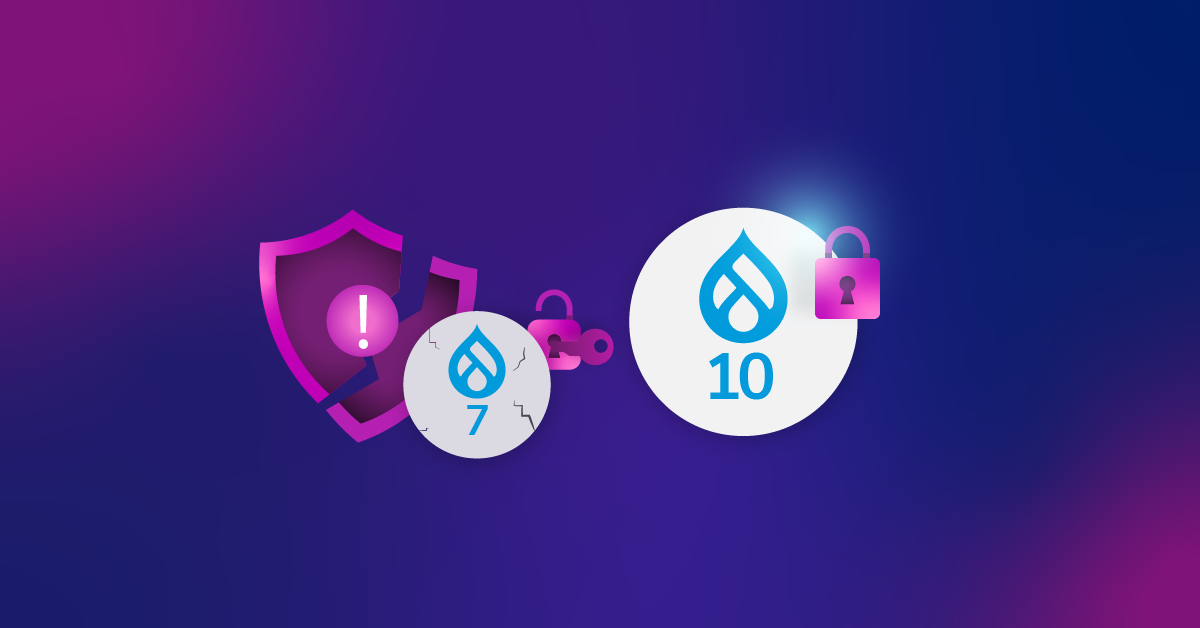
The Drupal Association announced in June 2023 that support for Drupal 7 has been extended for an additional 15 months from November 2023 to January 2025. While this is welcome news for many IT departments that were scrambling to move off of Drupal 7 by November, it isn’t the reprieve that it first appears to be.
It’s important to recognize that delaying the decision to upgrade to Drupal 7 could have a very real and negative impact on your organization. At the top of this list is security. When the Drupal Association announced that Drupal 7’s end of life was being extended a final time, it also announced that support for Drupal 7 after August 1, 2023 would change in significant ways. Read this article to learn about the top ways security will be impacted by staying on Drupal 7.
Changes to Security Updates for Drupal 7
Not all security issues will be addressed proactively with a security update release the same day an issue is announced. The Drupal Security Team may choose to not fix some moderately and less critical issues rather than report them to the public issue queue for the community to address. Without a patch or update to fix the issue, this can cause vulnerabilities to become publicly known. This, in turn, makes it easier for a site to be hacked or defaced, its users exploited, or their data to be compromised.
Module Implications
After August 1, 2023, the modules used to build and maintain Drupal 7 may no longer receive updates. Modules may be flagged as insecure or unsupported if the module maintainers have not sufficiently responded to requests of the Drupal Security Team. If this happens, the module will not be unflagged or marked as secure/supported ever again.
Say Goodbye to Some Security Advisories
Another security risk with Drupal 7 is that the security team will no longer issue security advisories alerting Drupal 7 site managers about security issues with unsupported libraries that are used by many Drupal 7 sites. This means that a library you are using, such as CKEditor 4, may have a security issue and it would be up to you to determine if your site is impacted and to fix the issue.
Security Shouldn’t be a “Hope for the Best” Scenario
With these changes to the security coverage for Drupal 7, site administrators will need to be more vigilant than before when it comes to securing their sites. Drupal 7 site owners are advised to keep a close watch on the Drupal Security Advisories page and the Drupal 7 Core issue queue for items that may impact their site’s health, security, and reputation. When an issue appears that needs to be addressed, businesses may not have the luxury to wait for a fix to be produced. Be prepared to fix issues that may arise if a security patch isn’t immediately available for Drupal 7. When site security is on the line, one cannot hope for the best.
Ensure Security With Drupal 10
Security issues alone should be motivation to proceed with the migration to Drupal 10. Upgrade to Drupal 10 today to ensure the security and longevity of your website. While Drupal 7’s end-of-life has been extended, it’s crucial to understand that relying on an outdated CMS version can pose serious risks to your organization. With limited proactive security updates and the potential for unsupported modules and libraries, delaying the upgrade could leave your site vulnerable to hacking and data breaches.
Take the leap to Drupal 10 and embrace a modern, secure, and feature-rich platform that aligns with current technology trends. For more information on Drupal 7 and the features you may be missing out on, check out this article.
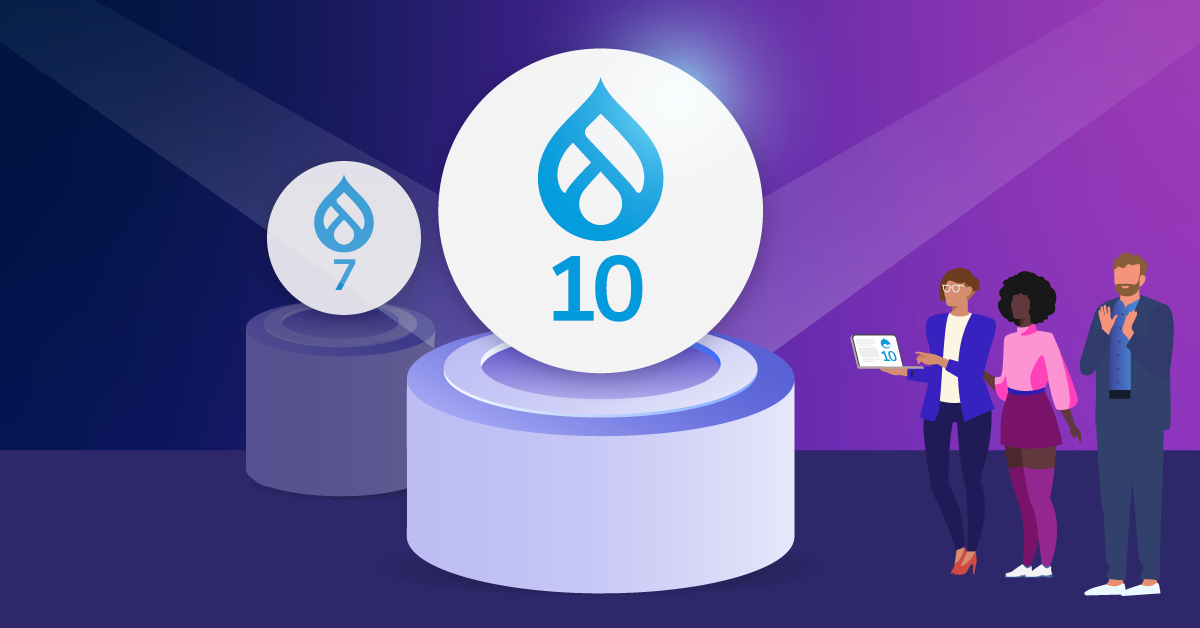
At DrupalCon North America in June 2023, the Drupal Association announced that support for Drupal 7 has been extended for an additional 15 months from November 2023 to January 2025. However, if your website and digital experience platform is important to your company’s objectives to compete and win digitally, do not wait to migrate.
Drupal 7 will be 14 years old when it is finally retired in January 2025. Over the past 14 years, web trends have changed dramatically. Drupal 7 did receive some small enhancements over time, but no major core features were released in Drupal 7’s lifetime. This means that Drupal 7 has been a functional relic since Drupal 8’s release in November 2015! If your organization is using Drupal 7, you are missing out on many innovations that have been added into Drupal since that time. Here, we outline some of the features that modern Drupal has to offer.
Flexible and Modular Architecture Approach
Drupal is now highly flexible and can be customized to meet the specific needs of an enterprise. It offers a modular architecture approach that allows for the integration of external systems as well as adding new features specific to the business’s needs. Drupal can scale to handle high traffic volumes and large amounts of content, making it suitable for enterprise-level projects.
Effortless Integration
Most people see Drupal as simply a content management system (CMS), but in fact, it also offers powerful marketing capabilities. Drupal 10 integrates effortlessly with services to provide functionality like segmentation, personalization, A/B testing, marketing automation, and analytics. When functioning as a core component of your digital experience platform, Drupal can easily tailor marketing campaigns, deliver targeted content, and measure the metrics that matter to engage the audiences you are seeking.
Multichannel Capabilities
Drupal 10 enables marketing departments to deliver consistent and engaging digital experiences across multiple channels, not just web. Drupal’s multi-channel capabilities allow businesses to seamlessly deliver content to websites, mobile apps, social platforms, IoT devices, and more. This empowers them to reach audiences with the right message at the right moment. While all of this is possible with Drupal 7, it is cumbersome to implement and maintain.
Strong Search Engine Optimization
Drupal 10 has features that contribute to strong search engine optimization (SEO). It provides clean HTML 5, semantic markup, and URL structures that can positively impact search rankings. Drupal also offers essential SEO modules such as XML sitemap generation, meta tag management, and redirects, which elevates site visibility in search engines.
Efficiently Manage Complex Content Ecosystems
Drupal excels as a CMS, providing powerful tools for creating, organizing, and publishing content. It offers a user-friendly interface, advanced workflow management, version control, and multilingual capabilities. These features enable enterprises to efficiently manage complex content ecosystems across multiple channels and touchpoints.
With Drupal 10, web teams can create and deliver custom content quicker and easier than ever. Current versions of Drupal embrace new technologies and trends in the digital space. It evolves with the industry, regularly releasing updates and new versions that incorporate the latest innovations. This ensures that enterprises using Drupal can stay ahead and take advantage of emerging technologies and best practices.
Easy Security Updates
Rather than jumping through hoops to implement security updates in Drupal 7, developers can run a single command to implement security updates for your site. This reduces the effort to update the site to keep bad actors at bay.
The ease of updates with Drupal 10 even goes beyond security updates. When Drupal core and contributed modules are updated with new features or bug fixes, they are available to your site using the same command. Starting with Drupal 8 and continuing into Drupal 10, the system uses Composer to manage package and library dependencies. This takes the guesswork out of knowing what underlying code is needed to make your site operate. Learn more about how Composer makes your site more secure and your developers’ lives easier.
Upgrade to Drupal 10 Today
Organizations still using Drupal 7 are missing out on the flexibility, customization options, scalability, and marketing capabilities available in the newer versions. Drupal 10 allows for the management of consistent and engaging digital experiences across various channels, enhances search engine optimization, and enables web teams to deliver content more efficiently. Interested in learning more about the features and benefits of Drupal 10? Check out this article.
Drupal 10 will be arriving summer of 2022. Much like the update from Drupal 8 to Drupal 9, this update will be a smooth transition for any well-built and maintained Drupal site. Since Drupal 8, the maintainers of Drupal have implemented a predictable approach to releasing new versions of the CMS. This benefits everyone that builds, maintains, or manages a Drupal site by giving us a clear path for updates from one major version to another.
In many cases, this update is trivial for developers and can be performed with a few simple steps. For site administrators and content creators, it's a seamless transition that brings in new features and enhancements that makes managing Drupal sites easier and faster.
The first beta version of Drupal 10 will be released alongside a beta version of Drupal 9 (either 9.4 or 9.5, depending on Drupal 10's readiness). The release of these together is intentional and reveals the commonality between these two major versions of Drupal. When Drupal 10 drops, it will essentially be the same as the last minor version of Drupal 9, with a few key differences that will benefit site managers and developers.
Deprecated Code Removed
Drupal core code and libraries that have been identified as "deprecated" in Drupal 9 will be removed. Throughout the life of Drupal 9, improvements have been made to the code that runs the framework. When an enhancement is made in the code, there's likely some other code that can be retired.
That retiring code can't be immediately removed as it may break functionality in a site's custom code or contributed modules, so this code is marked as deprecated to communicate that it's being removed in the next major version of Drupal. This gives developers ample time to update their code to be compatible with Drupal 10.
An example of deprecated code in Drupal core in Drupal 9 is the class "NodeAddAccessCheck." This helps determine if a user has permission to add a new Drupal node (content entity) to the site. This is being removed in favor of "EntityCreateAccessCheck" which performs the same function but is used to check for permissions to add any entity type rather than just nodes. This streamlines the codebase and makes writing code that needs to check user permissions more consistent.
Another type of deprecation that Drupal needs to account for is when external code and libraries Drupal uses are going end of life. Drupal leverages the Symfony framework "under the hood" to provide a lot of functionality that's common to almost every website—things like managing cookies, handling and routing incoming requests, and services. This gives us a great starting point for building Drupal core rather than having to reinvent the wheel for each of these components. Drupal 9 uses Symfony version 4, which is slated to go end of life in November 2023. Drupal 10 will use Symfony version 6, which brings the latest enhancements of Symfony to Drupal and will help to keep the system secure.
Some of these may seem like trivial updates to Drupal 10, but these improvements help with site security, performance, and consistency from page to page in the admin UI. Together this makes Drupal 10 easier for content creators and site administrators to carry out their work on the site.
Changes to Some Drupal Defaults
When installing Drupal for a new website application, there are a lot of settings that implement the out-of-the-box look and functionality of the site. When installing a new site in Drupal 9 with the standard installation profile, we are greeted with this frontpage on the site:
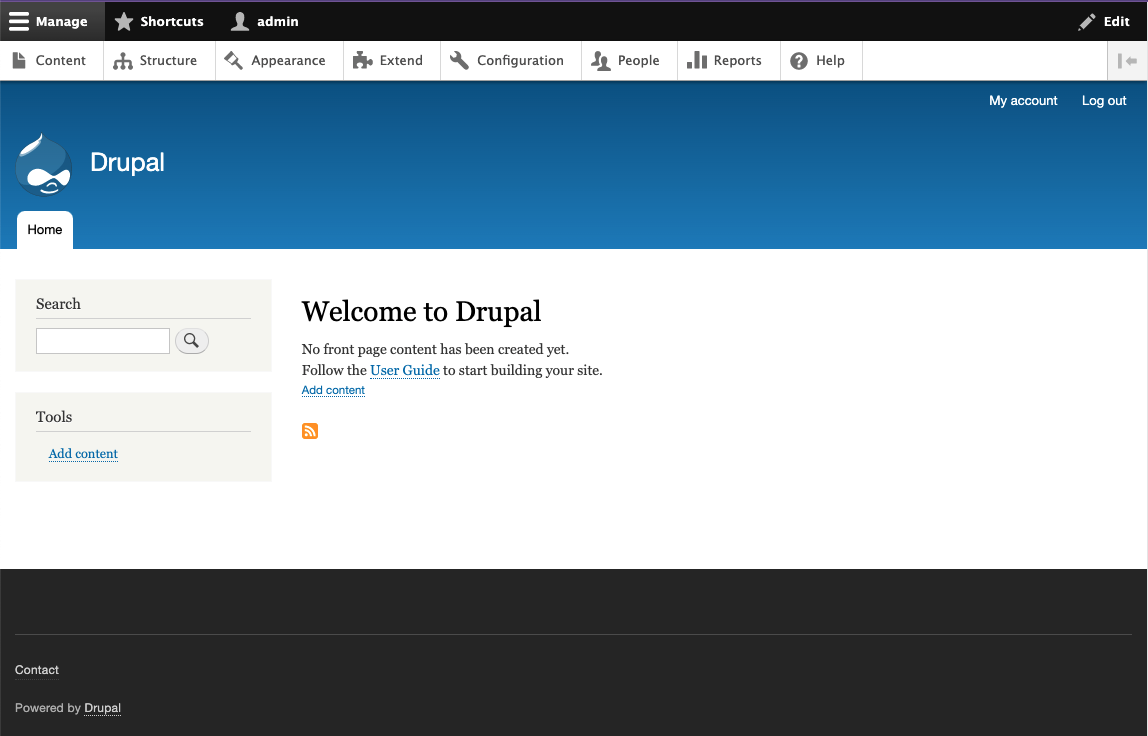
This familiar face is the default theme, Bartik, for the site.
The default front-end theme for Drupal 10 is now Olivero which is described as "A clean, accessible, and flexible Drupal front-end theme." It was originally introduced as an experimental theme to Drupal core in version 8.8. The Olivero theme has been available as a stable theme since Drupal version 9.3.
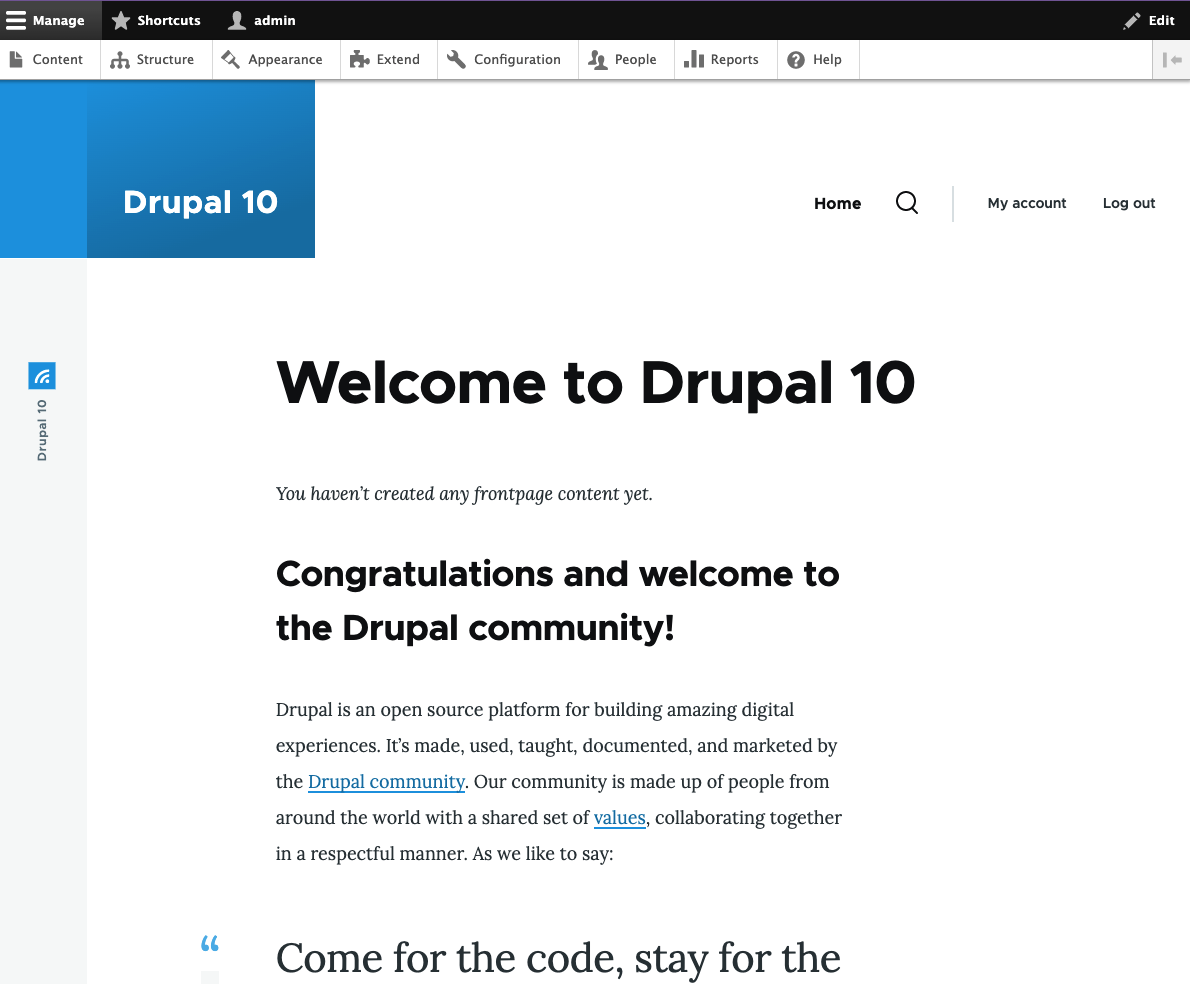
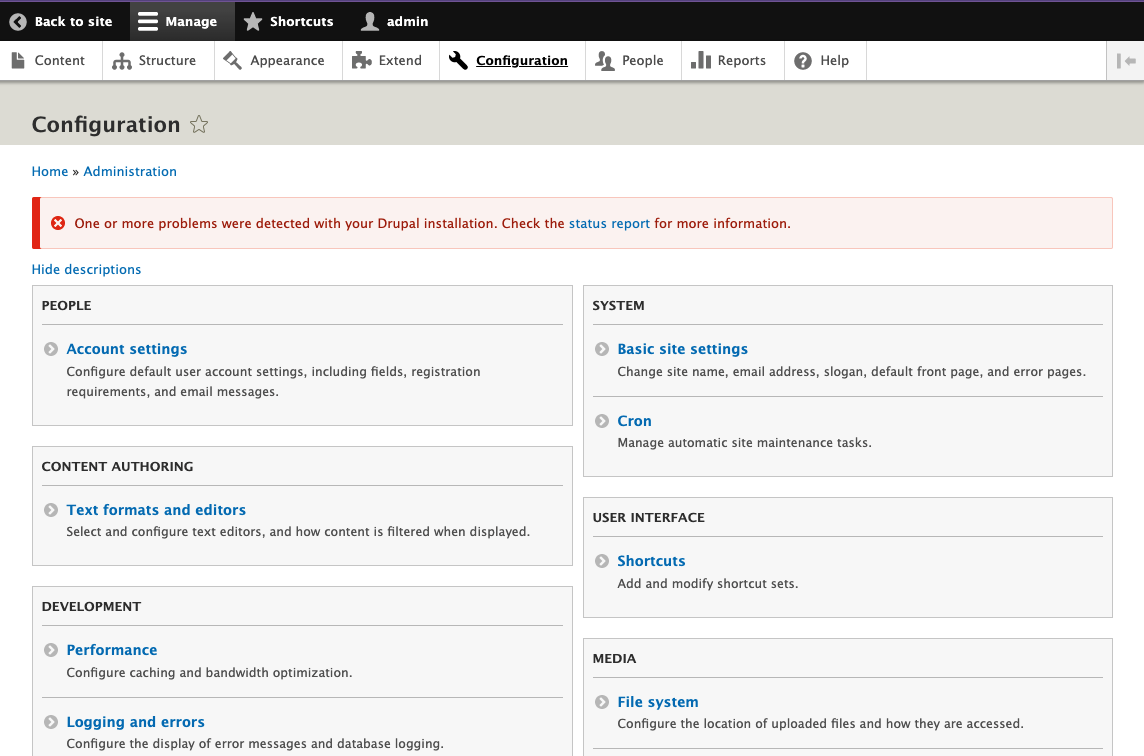
Another visual change to Drupal is a new administration theme, Claro, which is replacing the older Seven theme.
Here is the old Seven administration theme:
Here is the refreshed Claro theme:
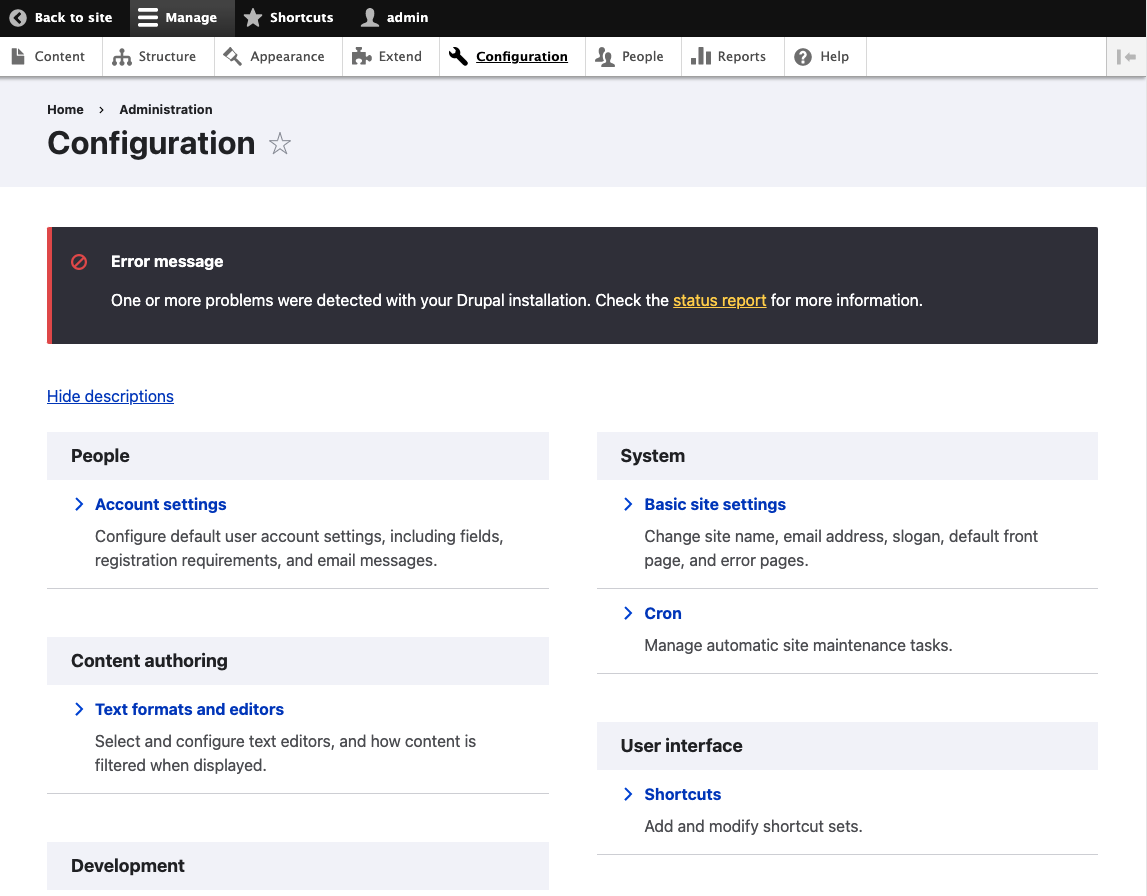
The new default themes in Drupal 10 will provide a better experience for content managers of Drupal sites. Content managers and site administrators will be able to more easily find and do the work they need to do in the back end of their Drupal sites.
Removing Some Core Modules
Drupal 10 core will say goodbye to a few modules that are redundant or not widely used. These modules will be moved to the Contributed Module space for continuity. This move will help make Drupal's core leaner and easier to maintain. According to Drupal core discussions, these modules are likely to be removed from Drupal core:
- Aggregator - Gathers and displays syndicated content (RSS, RDF, and Atom feeds) from external sources.
- QuickEdit - In-place content editing.
- HAL - Serializes entities using Hypertext Application Language.
- Activity Tracker - Enables tracking of recent content for users.
- RDF - Adds metadata to pages to let other systems understand its attributes.
- Forum - Provides discussion forums.
Some of these core modules were enabled by default, but hardly ever used according to usage statistics and user surveys. Clearing these from Drupal core will help remove visual clutter and improve the content management experience for users.
In addition to some core modules being removed, some JavaScript dependencies will also be removed. The changes to the JavaScript that is shipped with core will help make core more secure and easier to maintain. The biggest change will be the removal of some uses of jQuery. jQuery has been a part of Drupal since Drupal 5 (released in 2007). The move to using vanilla JavaScript removes release risks that have come up in the past due to jQuery and jQuery UI's security and release processes.
Saying goodbye to QuickEdit will make Drupal 10 easier for content creators to manage. The QuickEdit module added a pencil icon next to any content field on the site. While this was a nice-to-have feature when it was first introduced in Drupal 7, its usefulness has diminished since the introduction of workflows with content revisions. Once content moderation workflows are added to a Drupal site, the inline editing experience of QuickEdit can't be used as it's not compatible with workflows.
Among the great improvements to the overall system, are some new features that content creators are going to enjoy.
New Editing Experiences
CK Editor 5 will be the default rich text (WYSIWYG) editor in Drupal 10. With it comes a lot of features that will improve the content editing experience. These include Autoformatting where you can add bold with **asterisks**, headings with #, inline code with 'text', code block with ''', and bulleted lists with *.
There are also improvements to the paste-from-document functionality. The new version of CK Editor touts the ability to remove the extraneous markup that comes from pasting from Word or Google Docs. It also automatically uploads images when pasting images from the clipboard, rather than simply adding it as an tag that points to a third-party site.
Drupal's popular page-building tool, Layout Builder is also slated to have improvements that will make managing content on the site better for content creators. The full details of these improvements are not yet available. I hope and suspect that a new layout editing experience will include a modal rather than sticking to the small sidebar that we have today.
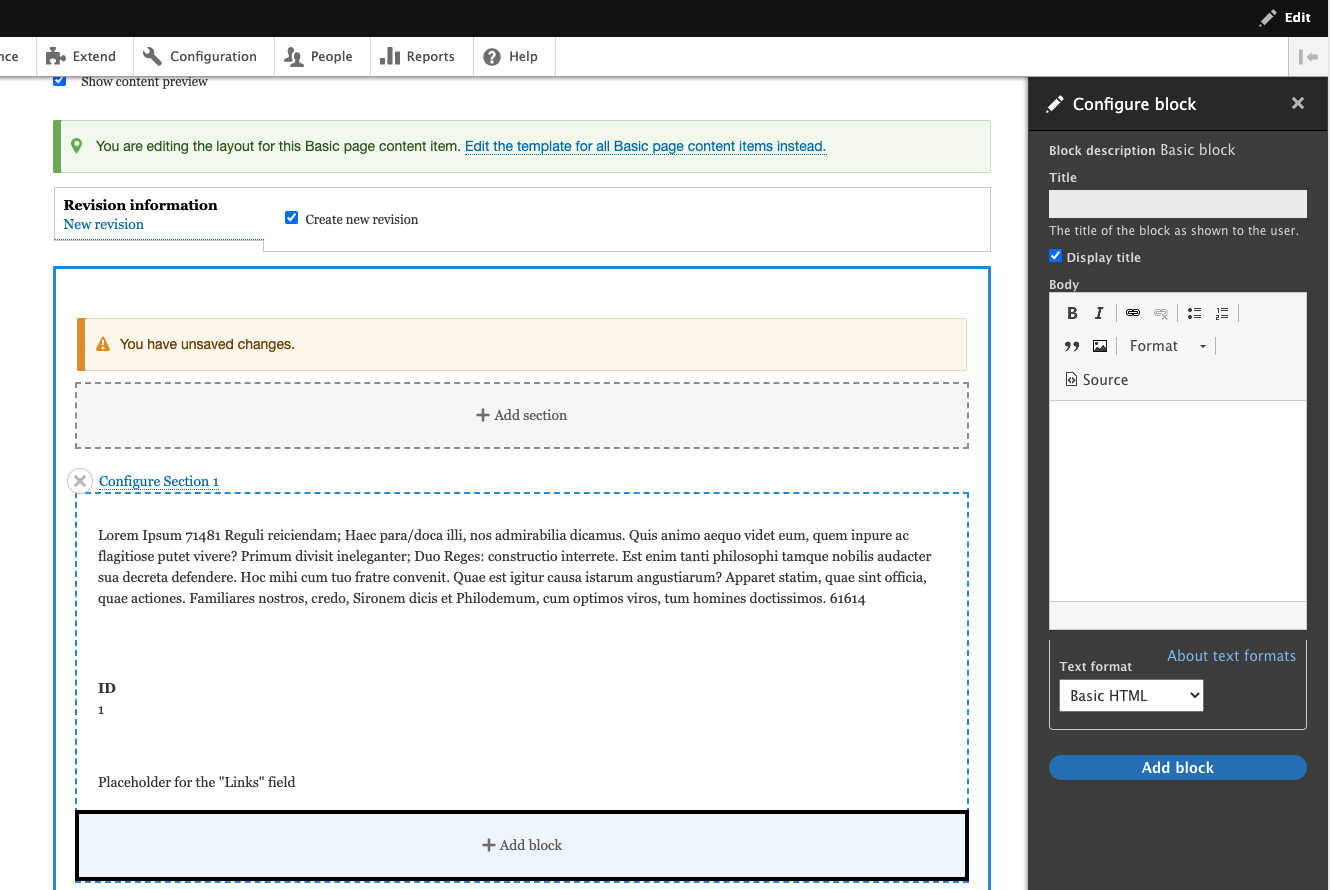
Editing large blocks of text in the sidebar can be cumbersome and confusing, especially when there are more than just a few fields to edit. Improvements to this experience will make managing layouts much easier.
Other enhancements to Layout Builder could include improvements to the interface itself. For some, the Layout Builder interface is clunky, and pending feature requests ask for better ways to move and manage blocks that are placed within Layout Builder.
Foundation for Future Improvements
The release of Drupal 10 clears the path for additional improvements to Drupal that will be built over the next few months and years. Keeping Drupal up-to-date with the latest, fastest, and most secure open source libraries and components give Drupal developers the ability to continually innovate and bring new features to Drupal.
With the emergence of composable experiences and the further intertwining of web and social media in marketing, Drupal 10 continues to pave the way for some great user experiences into the future.
About Drupal Sun
Drupal Sun is an Evolving Web project. It allows you to:
- Do full-text search on all the articles in Drupal Planet (thanks to Apache Solr)
- Facet based on tags, author, or feed
- Flip through articles quickly (with j/k or arrow keys) to find what you're interested in
- View the entire article text inline, or in the context of the site where it was created
See the blog post at Evolving Web